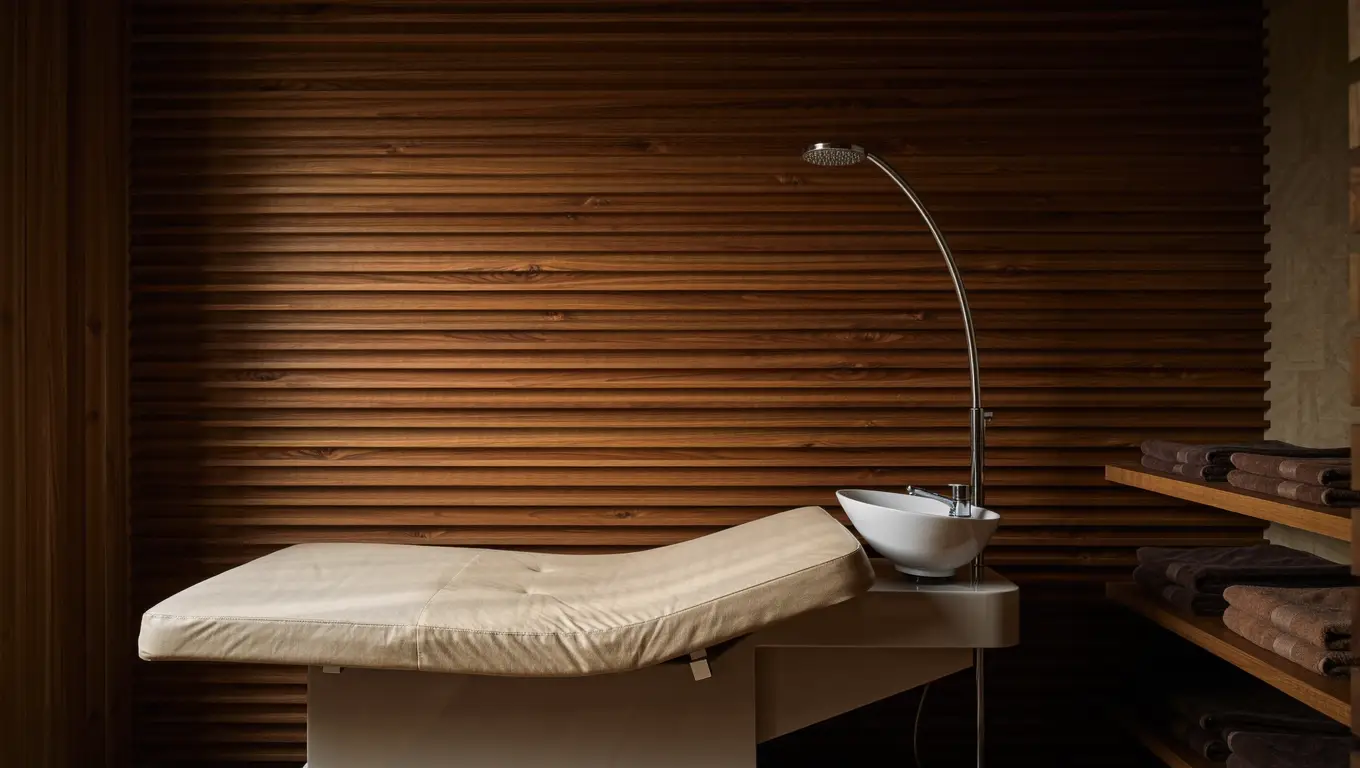
To start a head spa you need a wash station where the client lies flat or nearly flat (a head spa bed with built-in basin, or a backwash unit with leg rest), reliable hot water and drainage, a GFCI-protected power supply, a facial steamer or warm towels, a scalp camera, a therapist stool, lighting control and closed storage.
Key takeaways
- The wash station is the core purchase: a lay-flat head spa bed gives the signature experience, while a leg-rest backwash unit is a lower-commitment start.
- Plan plumbing and power before furniture: head spa beds need hot and cold supply, a drain with trap, and often a dedicated GFCI-protected outlet.
- Treatments typically run 60 to 90 minutes, so client comfort and therapist posture matter more than in a quick salon rinse.
- Confirm who may legally shampoo and massage in your state; in California, estheticians may do scalp treatments but not shampooing or blow-drying.
- Keep wellness claims modest; dermatologists separate relaxation services from medical hair-loss care.
What a head spa service involves
A Japanese-style head spa is a long, quiet scalp service. An Associated Press report from May 2026 describes the typical sequence: a scalp inspection, deep cleansing, exfoliation, steam, and an extended head, face and neck massage, often with conditioning masks and aromatherapy in a dim room. Sessions usually last 60 or 90 minutes; the two San Francisco businesses in the report charged about $100 per hour and from about $200 per hour respectively.
That service shape drives the equipment list. The client is lying back for an hour or more, the therapist is seated or standing at the head for most of it, and water is running for much of the session.
The wash station: three options
Lay-flat head spa bed
A bed-length upholstered top with a basin built into the head end, often with an overhead arm holding a handheld shower and, on some models, a water-circulation spout that keeps warm water flowing around the scalp. Our Serene head spa bed follows this layout: a warm beige upholstered mattress, an integrated white ceramic basin, oak-clad side panels and an adjustable overhead shower arm. Clients lie fully supported, which is the experience they have seen online.
Backwash unit with leg rest
A reclined shampoo unit with an extending leg rest. Clients are not fully flat, but legs are supported and the angle is gentle. It is a sensible start for a hair salon adding head spa as a menu item, because the unit still works for everyday color rinses. Compare options in our shampoo and backwash units range.
Treatment bed plus portable basin
Some spas use an existing facial bed with a portable basin. This avoids plumbing work but limits the water flow that defines the service, and some state boards restrict unplumbed water sources. If you try it, read your board’s rules first (see the licensing section below).
| Factor | Head spa bed | Backwash with leg rest | Facial bed plus portable basin |
|---|---|---|---|
| Client position | Fully flat or near flat | Reclined, legs supported | Flat |
| Plumbing | Hot, cold and drain | Hot, cold and drain | None, or limited |
| Power | Often needed (circulation pump, controls) | Needed for electric leg rest | Facial bed motors if electric |
| Floor area | Largest: bed length plus therapist space | Medium | Medium |
| Other uses | Head spa only | Everyday shampoo and color | Facials and other treatments |
| Best for | Dedicated head spa rooms | Salons testing the service | Short trials where rules allow |
Water and drainage
A head spa bed is a plumbing fixture. Expect hot and cold supply lines (commonly 1/2 inch), a drain with a code-compliant trap and hair catcher, and backflow protection for the handheld shower. Ask for the connection drawing before you design the room, because the drain position decides where the bed can go. Our shampoo bowl plumbing guide covers supply pressure, traps, hair interceptors and vacuum breakers in detail; the same principles apply here.
Hot water deserves extra attention. A head spa session keeps water flowing for long stretches, often at the same time as other bowls in the salon. The U.S. Department of Energy’s water heater sizing guide recommends sizing a tankless unit by the combined flow of fixtures running at once and the temperature rise needed, and a tank by its first-hour rating against peak demand. Give your plumber the number of head spa beds and bowls that might run together.
Power and electrical safety
Water and electricity sit side by side in a head spa room: circulation pumps, bed controls, steamers, scalp cameras and hair dryers. The U.S. Consumer Product Safety Commission’s fact sheet on GFCIs explains that a ground-fault circuit interrupter cuts power when it detects a current imbalance as small as 0.006 amperes, and recommends GFCI protection where electrical equipment is near water. Have a licensed electrician plan outlets at each bed, confirm whether any item needs a dedicated circuit, and keep outlets clear of splash zones.
Our electrical items are built for 110 to 120V, 60 Hz. Ask about the UL or ETL listing status of each model at quote stage, because your inspector or landlord may ask for it.
The rest of the equipment list
| Item | Purpose | What to check |
|---|---|---|
| Head spa bed or backwash unit | Wash and massage station | Basin size, neck support, upholstery, connection drawing |
| Facial steamer or towel warmer | Steam phase and warm towels | Voltage, water tank, distance from bed |
| Scalp camera or microscope | Before-and-after scalp inspection | Screen or tablet mount, cleaning of the lens tip |
| Therapist stool with backrest | Seated massage at the head | Height range that suits your bed height, casters, wipe-clean seat |
| Trolley or side cart | Products, brushes, towels within reach | Closed drawers, stable casters |
| Dimmable lighting | Calm atmosphere, bright light for inspection | Separate task light near the head end |
| Closed storage | Clean and used towels, retail stock | Labeled clean and soiled areas |
| Styling station and dryer | Finish after the service | Who is licensed to blow-dry (see below) |
For a seated finish after the wash, a styling chair or all-purpose reclining chair at a station works well. Some spas also keep a facial or treatment bed in the same room for add-on facials.
Room layout
A head spa room is laid out around the head end of the bed, because that is where the therapist works for most of the session.
- Bed placement. Set the bed so the head end faces into the room, with the drain and supply below or behind it. Leave space behind the basin for the therapist to sit on a stool with legs under the basin area or beside it.
- Working space. Shampoo unit manuals give a useful benchmark for space behind the basin: Takara Belmont’s RS III installation instructions call for 660 mm (about 26 inches) or more from the basin end to the wall on several models. A seated therapist usually needs more than a standing stylist, so plan generously.
- Side access. Leave a clear path along at least one side of the bed for the client to get on and off safely.
- Trolley zone. Put the trolley on the therapist’s dominant-hand side at the head end.
- Lighting. Use dimmable ambient light plus a task light at the head end for scalp inspection.
- Sound and privacy. A door or a partition helps; the service sells calm.
Licensing: settle this before you buy
Head spa services sit across several license types, and states treat them differently. In California, the Board of Barbering and Cosmetology’s industry bulletin on head spas (November 1, 2024) says estheticians may perform facials and scalp treatments but are not licensed to shampoo or blow-dry; those services must be done by a licensed barber, cosmetologist or hairstylist. Tennessee’s shampoo and head spa FAQ says shampooing has been deregulated there, while blow-drying and styling still require a cosmetology or master barber license and aestheticians may massage the scalp. Your state may differ again, so check with your board and confirm your establishment license covers the services.
Staffing decides equipment too. If your therapists are estheticians in a state like California, someone licensed for shampooing must perform the wash, which affects how many stations and staff you schedule.
Sanitation
Plan for cleaning between every client: wipe-clean upholstery, a basin that drains fully, a hair catcher you can reach, and covered storage for clean towels. California rule 16 CCR section 990 requires headrests to be covered with a clean towel or paper sheet for each client and shampoo bowls to be cleaned after each shampoo; treatment tables must be covered after each use. Use EPA-registered disinfectants according to the label contact time, and check your own state board’s rules.
Wellness claims
Some head spas advertise results for hair loss or scalp conditions. In the AP report, a Stanford dermatology professor stressed separating a relaxation service from medical care for hair loss. Keep marketing focused on cleansing, relaxation and scalp care, and refer clients with skin or hair conditions to a doctor.
Ordering head spa furniture factory-direct
Salon & Steel builds head spa beds, backwash units and matching stations to order in our factory in Foshan, China. Upholstery colors and side-panel finishes can be customized, and the whole room can ship together with LTL door delivery in the US. Send your room dimensions and plumbing positions, and we will check fit before production.
Frequently asked questions
What is the most important piece of head spa equipment?
The wash station. A lay-flat head spa bed with a built-in basin gives the full experience clients expect, because they lie supported for a 60 to 90 minute service. Salons testing the service often start with a backwash unit with a leg rest, which also works for everyday color rinses. Plan plumbing and power around whichever station you choose.
Does a head spa bed need plumbing?
A plumbed head spa bed needs hot and cold supply, a drain with a trap and hair catcher, and backflow protection for the handheld shower, installed by a licensed plumber. Portable basins avoid plumbing but limit water flow, and some state boards restrict unplumbed water sources. Check your board’s rules and get the bed’s connection drawing before planning the room.
Can an esthetician perform head spa services?
It depends on the state. California’s board says estheticians may perform scalp treatments but not shampooing or blow-drying, which require a barber, cosmetologist or hairstylist license. Tennessee has deregulated shampooing, but blow-drying still needs a cosmetology or master barber license. Confirm the rules with your own state board before you hire or buy equipment.
How much space does a head spa room need?
Plan for the bed’s full length, a clear side path for the client, and generous working space at the head end for a seated therapist and trolley. Manufacturer manuals give useful benchmarks; Takara Belmont’s RS III shampoo unit instructions call for at least 660 mm, about 26 inches, behind the basin on several models. A seated therapist usually needs more.
Planning a head spa room? Send us your floor plan through our design and layout service and we will propose a bed, station and storage layout.
Sources
- Associated Press via ABC News — What to know about the Japanese-style scalp massages catching on in the US
- California Board of Barbering and Cosmetology — Industry Bulletin: Head Spas
- Tennessee Department of Commerce and Insurance — Shampoo and Head Spa FAQs
- U.S. Consumer Product Safety Commission — What is a GFCI? (fact sheet)
- U.S. Department of Energy — Sizing a New Water Heater
- Takara Belmont — RS III Shampoo Unit Installation Instructions
Fitting out a salon?
Send your floor plan or model list. Our factory replies with specifications, lead times and freight to your ZIP code within one business day.


