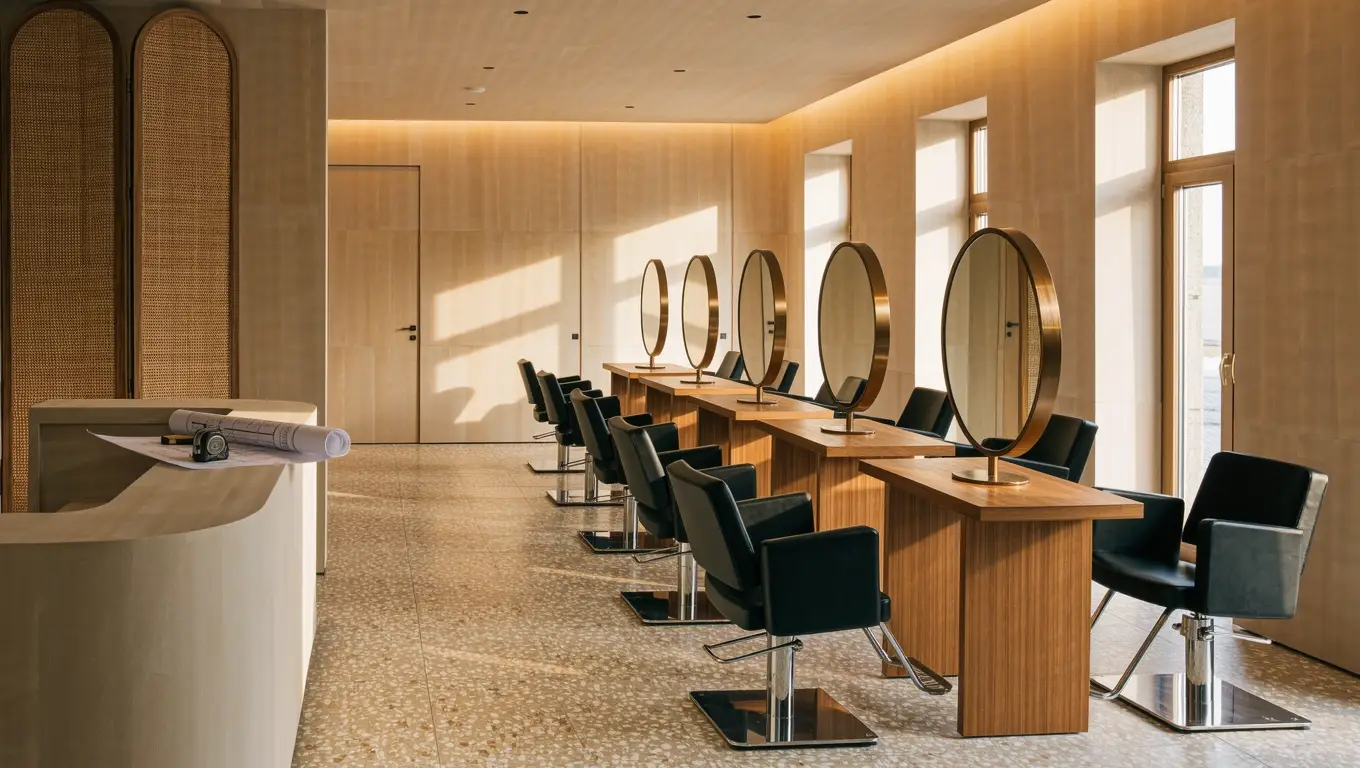
There is no fixed price, but one well-documented benchmark is the Great Clips franchise estimate of $187,800 to $419,900 per salon, covering build-out, fees and working capital. Independent salons usually spend less because they skip franchise fees, but build-out, deposits, furniture and three to six months of operating cash still dominate the budget.
Key takeaways
- Leasehold improvements (plumbing, electrical, flooring, lighting) are usually the largest single cost, often bigger than furniture and equipment combined.
- A six-station salon furnished at advertised US retail prices needs roughly $7,600 to $26,400 for chairs, stations, backwash units and a reception desk.
- Keep three to six months of operating cash in reserve; Great Clips budgets $20,000 to $60,000 for this alone.
- License fees are small (California charges $50 to apply for an establishment license), but inspections can delay opening if the build-out fails.
- Booth rental versus commission changes how many chairs you buy on day one and how fast you recover the investment.
What actually drives the cost of opening a hair salon
Online estimates for opening a salon range wildly because they mix very different projects. A two-chair studio in an existing salon space and a twelve-station salon in a raw shell building are not the same business. Before comparing numbers, decide which of these four situations you are in:
- Second-generation salon space: the previous tenant was a salon, so shampoo plumbing, hair traps and some electrical circuits already exist. This is the cheapest route.
- Retail conversion: a former shop or office with no salon plumbing. Expect trenching or core drilling for backwash drains and new dedicated circuits.
- Raw shell: new construction with bare walls and slab. You pay for everything, including HVAC distribution, ceilings and restrooms.
- Salon suite or booth rental: you furnish one room or chair in someone else’s building. Costs drop to furniture, tools, product and licensing.
The U.S. Small Business Administration recommends splitting your startup cost estimate into one-time expenses (equipment, permits, design) and monthly expenses (rent, payroll, utilities), and planning at least one year of the monthly side. That split is the most useful way to build a salon budget.
A published benchmark: franchise disclosure figures
Franchisors must disclose an estimated initial investment, which makes their numbers some of the few audited-style public benchmarks for salon openings. Great Clips publishes its US estimate at $187,800 to $419,900 per salon, including construction, grand opening marketing and working capital. The breakdown is useful even if you are opening an independent salon, because it shows where the money goes.
| Line item (Great Clips US estimate) | Low | High | Applies to an independent salon? |
|---|---|---|---|
| Leasehold improvements and site fees (labor, fixtures, opening inventory, rent and deposits, freight, signage, furnishings) | $119,800 | $289,400 | Yes, this is your build-out and fit-out |
| Additional funds (3 to 6 months) | $20,000 | $60,000 | Yes, working capital |
| Franchise fee | $20,000 | $35,000 | No |
| Grand opening advertising | $20,000 | $25,000 | Partly; independents often spend less |
| Initial ad fund contribution | $5,000 | $5,000 | No |
| Insurance | $1,500 | $3,000 | Yes |
| Training, travel and living (per participant) | $1,500 | $2,500 | Optional (education, product training) |
Remove the franchise fee, ad fund, training and grand opening budget and the same build comes to roughly $141,300 to $352,400 before your own marketing, for an independent operator taking a comparable space. That is not a quote for your project, but it is a realistic frame for a salon in a retail center.
Build-out: where most of the money goes
Build-out is the line item that surprises first-time owners. Hair salons need more plumbing and power than most retail tenants, and these trades are priced per project by local contractors, so get at least two bids before you sign a lease. The main drivers:
Plumbing for the shampoo area
Each backwash or shampoo bowl needs hot and cold supply, a drain with a P-trap and, ideally, a hair trap. If the bowls sit on an island far from existing drain lines, slab cutting adds cost quickly. Grouping backwash units on one wall shared with the restroom or laundry keeps runs short. A typical one-piece backwash unit is about 45 inches deep, so a row of three needs roughly 6 to 7 feet of depth including the stylist’s working space behind the bowls.
Electrical
Plan circuits around actual loads: blow dryers, flat irons, color processors, hood dryers, washer and dryer, and lighting. Many salons put two duplex outlets at every station. Ask your electrician to size circuits so two stylists blow-drying at the same time on adjacent stations do not trip a breaker.
Water heating, HVAC and finishes
Shampoo bowls draw a lot of hot water at peak hours, so the water heater is often upgraded. Chemical services and dryers add heat and odor, which affects HVAC sizing. Floors must handle hair color and constant sweeping; sealed concrete, porcelain tile and commercial vinyl are common choices.
Furniture and equipment budget
Furniture is one of the few costs you control directly. To give owners a grounded starting point, we surveyed advertised prices from major US online salon furniture retailers in October 2026. These are retail list prices, not quotes, and they move with promotions and freight costs.
| Item | Advertised US retail range (Oct 2026 survey) | Qty for a 6-station salon | Example subtotal |
|---|---|---|---|
| Hydraulic styling chair | About $339 to $1,449 each | 6 | $2,034 to $8,694 |
| Styling station or mirror unit | About $429 to $2,079 each | 6 | $2,574 to $12,474 |
| Backwash or shampoo unit | About $599 to $1,719 each | 2 | $1,198 to $3,438 |
| Reception desk (about 70 inches wide) | Around $1,800 | 1 | About $1,800 |
| Core furniture total | About $7,600 to $26,400 |
Add hood or dryer chairs, a color bar, trolleys, retail shelving, waiting seating, laundry, a sterilization area and small tools. Freight is real money too: furniture ships by LTL truck, and liftgate delivery is usually extra.
Choose chairs by use, not looks alone. A 23-inch round base is the common standard for salon styling chairs, and seat heights generally run about 19 to 26 inches, which suits most stylists. Pump ratings vary; heavier-duty pumps around 300 lb are worth it for busy floors. For the shampoo area, backwash units with a tilting bowl reduce neck strain for clients and cut complaints.
Buying factory-direct can lower the furniture line, particularly for multi-station orders. Our factory in Foshan builds mixed-model orders to your upholstery color and finish, and every quotation lists warranty terms per model and component. Browse the full salon furniture range to see what can go on one order.
Licenses, insurance and professional fees
State board fees are small compared with build-out. The California Board of Barbering and Cosmetology charges a nonrefundable $50 establishment license application fee, and the establishment must meet the Barbering and Cosmetology Act and regulations before it opens. Other states differ, so check your own board. Local costs add up: city business license, sign permit, building permits for the build-out, fire inspection and certificate of occupancy.
Insurance usually includes general liability, professional liability, property coverage for your furniture and equipment, and workers’ compensation if you have employees. Budget for an accountant to set up payroll and sales tax, and a lawyer to review the lease, especially clauses about who pays for plumbing and electrical work.
Working capital and staffing model
New salons rarely run at full chair occupancy for months. That is why franchise estimates include three to six months of additional funds. Your staffing model also changes the math:
- Commission or hourly staff: you carry payroll from day one, but you control service and retail revenue.
- Booth rental: stylists pay you rent, which stabilizes cash flow, but you earn less per chair. Self-employment is common in this trade; the Bureau of Labor Statistics reports that 48% of hairdressers, hairstylists and cosmetologists were self-employed in 2025, with a median wage of $17.21 per hour.
- Hybrid: a few employees plus rented chairs, a common way to fill stations while you build a client base.
A practical approach is to plumb and wire for your full layout, but buy chairs and stations for the stylists you have signed, plus one or two spares. Order the rest when chairs are filled. A well-planned salon floor plan makes that phased approach easy because every future station already has power and space.
Funding and tax treatment
Lenders will ask for a written cost estimate, a break-even analysis and financial projections. The SBA’s microloan program lends up to $50,000, with an average of about $13,000, and proceeds can be used for furniture, fixtures and equipment, with a maximum term of seven years. Larger build-outs typically need SBA 7(a) or conventional bank financing, or equipment leasing.
On taxes, IRS Publication 583 explains that you can elect to deduct up to $5,000 of business start-up costs, reduced by the amount your start-up costs exceed $50,000, with the remainder amortized. Furniture and equipment are generally depreciated rather than treated as start-up costs, so ask your accountant how to classify each invoice.
Step-by-step budgeting checklist
- Pick the space type (second-generation, conversion, shell or suite) before pricing anything.
- Draw a layout with station count, shampoo area, color bar, dispensary and reception.
- Get plumbing, electrical and general contractor bids against that layout.
- Price furniture from two or three suppliers using identical specs and quantities, including freight and liftgate.
- List license, permit and inspection fees for your state and city.
- Add insurance, professional fees, opening inventory and marketing.
- Add three to six months of rent, payroll and utilities as working capital.
- Add a 10 to 15% contingency on build-out, since hidden slab and wiring issues are common.
Frequently asked questions
Can I open a small hair salon for under $50,000?
It is possible if you take over a second-generation salon space with plumbing in place, open with two to four stations, and buy furniture at the value end. The six-station core furniture package alone can run $7,600 or more at retail. Rent deposits, licenses, insurance and working capital quickly use up the rest, so a raw space will almost always cost more.
What is the most expensive part of opening a salon?
Leasehold improvements. In the Great Clips US estimate, leasehold improvements and site fees run $119,800 to $289,400, far above any other item. Plumbing for shampoo bowls, dedicated electrical circuits, HVAC, flooring and lighting drive that number. Choosing a space that was already a salon is the single best way to reduce it.
How many styling chairs should I buy at opening?
Buy for the stylists you have committed, plus one or two spares for growth and repairs. Wire and plumb the full layout from day one so later stations need only furniture. This keeps cash available for working capital, which new salons need while they build bookings in the first three to six months.
Is it cheaper to buy salon furniture factory-direct?
For multi-station orders it often is, because you avoid a retail markup, and you can choose upholstery colors and finishes. Compare landed cost, though: include freight, liftgate delivery, any import duties, lead time and the warranty terms listed in each quote. A cheaper chair that arrives after your opening date can cost more in lost bookings.
Sources
- U.S. Small Business Administration — Calculate your startup costs
- Great Clips — Franchise investment
- California Board of Barbering and Cosmetology — Establishment license application
- U.S. Bureau of Labor Statistics — Barbers, Hairstylists, and Cosmetologists
- U.S. Small Business Administration — Microloans
- Internal Revenue Service — Publication 583, Starting a Business and Keeping Records
Send us your floor plan and station count and we will prepare a factory-direct quote for your salon furniture package.
Fitting out a salon?
Send your floor plan or model list. Our factory replies with specifications, lead times and freight to your ZIP code within one business day.


